“We no longer want to be dependent on America. Not with our data. Not with our revenue. Not with our platform.” – Factor Blue, LinkedIn
I. The Location Assumption
Most e-commerce business owners might have the assumption that having your data stored in Europe means you are GDPR compliant and safe from foreign eyes or influence. Though it appears a reasonable assumption, it is a dangerous one. Here’s why.
The mistake in this assumption stems from thinking physical location is the only thing that matters in “the digital world”. We tend to think of accessing our data similarly to how we think about someone accessing our suitcase. Bear with me. If you put a suitcase in a locker in Berlin, only the authorities in Berlin can ask to see what’s inside. Right?
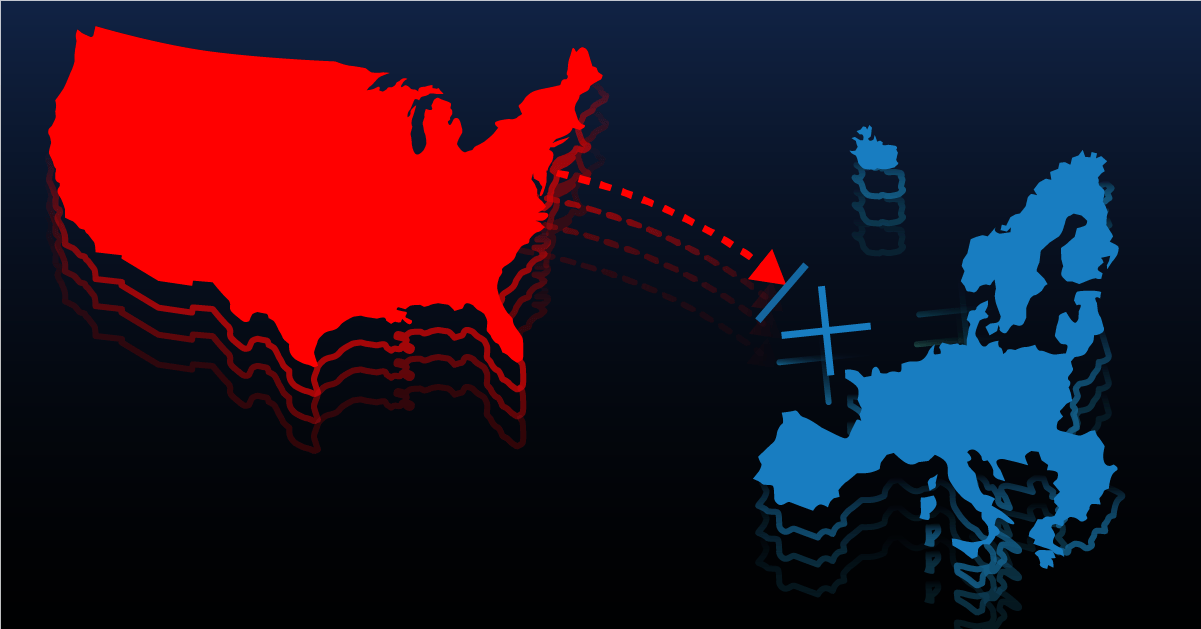
Wrong. In the digital world, the physical location of a server is only one part of a messy legal picture. Under the U.S. CLOUD Act, any company subject to U.S. jurisdiction, meaning any company owned or operated by a U.S. parent, can be compelled to provide the U.S. government with access to data it manages, no matter where that data is physically stored.
The Precarious EU-U.S. Data Privacy Framework
While the 2026 EU-U.S. Data Privacy Framework currently permits data transfers to certified U.S. providers, it acts as a temporary bridge, not a permanent shield. This agreement relies on U.S. commitments to limit surveillance; protections are in direct tension with the U.S. CLOUD Act, which still allows the U.S. government to demand data from any American-owned provider.
These agreements can be fragile. If the Framework is challenged or invalidated (like its predecessors), companies relying on U.S. infrastructure could find their entire legal basis for data transfer vanishing overnight.
Essentially, if an American company owns your hosting provider, shop platform, or other tools and platforms, your data remains within U.S. legal reach. Under GDPR, you are the “Data Controller,” which means you are responsible for the risks associated with your chosen tech stack.
The only way to future-proof against this uncertainty is a sovereign EU stack. Meaning data stored on hardware in the EU and managed by European companies and datacentres.
2. What is the U.S. CLOUD Act?
We mentioned the U.S. CLOUD Act in the previous section, but what exactly is it?
In short, the Clarifying Lawful Overseas Use of Data (CLOUD) Act was introduced in 2018 to solve a problem for U.S. law enforcement: physical borders. It was specifically designed to grant U.S. authorities the power to request, sometimes demand, data from any company under their jurisdiction, regardless of where the servers are located.
Before this, in high-profile cases like Microsoft Corp vs. United States, U.S. investigators struggled to access data stored on foreign servers.
The Nationality Rule
The key difference here is a shift from geography to nationality. If your organisation is a customer of an American cloud provider, for example, Microsoft, Google, or Amazon, the US government can request your data, even if it’s sitting in a data centre down the street from you in Amsterdam.
Though this isn’t an automatic open door, companies can and do challenge these requests. However, it creates a permanent legal link between your customer data and U.S. authorities. For a European merchant, this can create a direct conflict with GDPR and leave your business caught in a jurisdictional tug-of-war you didn’t sign up for.
3. The Conflict of Laws: GDPR vs The CLOUD Act
If the CLOUD Act is an open door for U.S. authorities, then the General Data Protection Regulation (GDPR) is a deadbolt. We’re looking at a direct collision between two massive, powerful legal frameworks, with your business at the epicentre.
The Liability Trap
In the eyes of the EU, you are the Data Controller. This means that you are legally responsible for what happens to your customers’ data.
If your U.S.-owned provider complies with a CLOUD Act warrant, the law may compel them to hand over your data. Crucially, if they also manage your encryption keys, authorities can compel them to decrypt that data, rendering your technical security measures questionable in the face of a U.S. legal request.
But in doing so, they (and by extension, you) are potentially violating the GDPR’s strict rules against transferring personal data to third countries without a European court order.
A standard Data Processing Agreement (DPA) cannot override the CLOUD Act. If your U.S. provider prioritises their home country’s law over the GDPR, you, as the Data Controller, are liable for the resulting ‘unsolicited transfer’ of personal data.
In 2026, this liability can result in fines of up to €20 million or 4% of your global turnover, whichever is higher.
The Gag Order Factor
Perhaps the most unsettling part of this collision is that you might never even know you’re losing.
Many U.S. warrants come with a gag order, of sorts. This mandate forbids the provider from telling the customer (that’s you) that authorities requested or seized their data. This completely contradicts GDPR’s principle of transparency.
You can’t protect your customers’ rights if you don’t even know their privacy has been compromised.
4. Why This Actually Matters
Data sovereignty is no longer just a legal detail. Because of laws like the CLOUD Act, it has become a practical part of staying operational and keeping customers happy. It really comes down to two main areas: reliability and trust.
-
Reliability
The CLOUD Act turns data sovereignty into a matter of risk management. If a company subject to U.S. law holds your business data, like customer lists or order history, U.S. authorities could access or monitor those records without ever involving your home government.
If the rules governing that data change suddenly, you could lose full control over your information. Ensuring your data is handled by a provider that isn’t subject to these overseas warrants means you aren’t at the mercy of foreign laws. It is about making sure you always have the final say over your own information so you can keep selling without fear or interruption.
-
Trust
EU shoppers are some of the most privacy-conscious in the world. They’re increasingly paying attention to the digital supply chain. Meaning they don’t just look at the price of a product; they look at which apps, plugins, and payment processors are handling their personal details. If your customer feels their information is reachable by foreign authorities through the CLOUD Act, they may decide to take their business elsewhere.
In contrast, being clear about using sovereign providers, i.e. those that are not subject to the CLOUD Act, can be a major selling point. When GDPR protection strictly shields their information, shoppers trust the brand more and return for future purchases.
5. The Solution: Building a “Sovereign Stack”
To truly protect an EU business from the CLOUD Act, you need a European tech stack. Choose a combination of software, hosting, and everyday tools where a US-based parent company owns no part of the chain.
Step 1: Secure Your Shop’s Engine
The most reliable way to stay in control of your core business is by choosing an e-commerce platform that keeps your data under European jurisdiction. You have two main paths:
- The Open Source Path: Platforms like Magento, WooCommerce, Shopware, and Drupal allow you to own the code and the database. Because there is no central “mother ship” in the US collecting your data, you are in total control.
- The EU-SaaS Path: There are also closed cloud platforms that are owned and operated entirely within Europe. Because these companies are European, not American, they do not fall under the CLOUD Act. Platforms like the cloud versions of Shopware (German) or PrestaShop (French) are examples of services that keep both the code and the house strictly under EU law.
Step 2: EU-owned Hosting
An EU eCommerce platform is only as European as the server it sits on. This is why your choice of a hosting provider is the foundation of your privacy. When you host your platform with a provider that operates and maintains its ownership entirely within the EU, you remove the legal “loophole” that the CLOUD Act relies on.
Since there is no US parent company involved, the US government has no legal path to demand your data. This combination of open source and local hosting creates a Sovereign Stack that keeps your business under EU protection.
Step 3: Swap Your Peripheral Tools
Though, the job isn’t finished at the server level. If you use US-based tools that house sensitive data for your day-to-day operations, the CLOUD Act can still reach that specific data. To build a complete Sovereign Stack, you can swap these for EU-based alternatives.
For example, instead of US Storage, you could opt for STACK (by TransIP), or instead of US Compliance Tools, consider iubenda or Complianz. Since these are European companies, your data stays under European (GDPR) protection.
The Sovereignty Audit
Is your current setup actually protected? Perform a quick audit by asking your provider three direct questions:
- Is your parent company based in a non-EU country? The CLOUD Act still governs US-based parent companies, even if they keep their servers in your city.
- Do you hold the encryption keys for my data? If your provider holds the keys, they have the technical power to unlock your information. If you hold the keys, you stay in total control.
- Does your corporate structure create a ‘Nationality Rule’ conflict? Ask if their parent company is subject to the CLOUD Act. A truly sovereign provider anchors itself entirely in the EU, ensuring that only European court orders, not foreign warrants, can trigger data access.
Conclusion: Reclaiming Control
Digital borders don’t always match the physical lines on a map. Knowing your data is stored on a server in Europe is not enough to guarantee privacy. True protection requires looking past the server’s location and into the corporate structure of the companies you work with. If a provider links to a US parent company, the CLOUD Act can reach across those borders, regardless of where the hardware actually sits.
By building a sovereign tech stack, pairing EU-owned software with an EU-owned managed hosting provider, you take back ALL the keys to your business. This approach ensures that your shop stays operational, your customer data remains private, and your business stays fully compliant with local laws.
Reclaiming control over your data isn’t just about security. It’s about ensuring you and you alone decide the future of your business.
Secure your store with Hypernode
If you are looking for a 100% European hosting partner, consider Hypernode. We are a managed hosting platform based entirely in Europe and part of team.blue, ensuring your data stays under EU jurisdiction and remains outside the reach of the CLOUD Act.
Hi! My name is Dion, Account Manager at Hypernode
Want to know more about Hypernode's Managed E-commerce Hosting? Schedule your online meeting.
schedule one-on-one meeting +31 (0) 648362102